Sunday, December 20

Colonel Thomas Blagge's Regiment of Foote

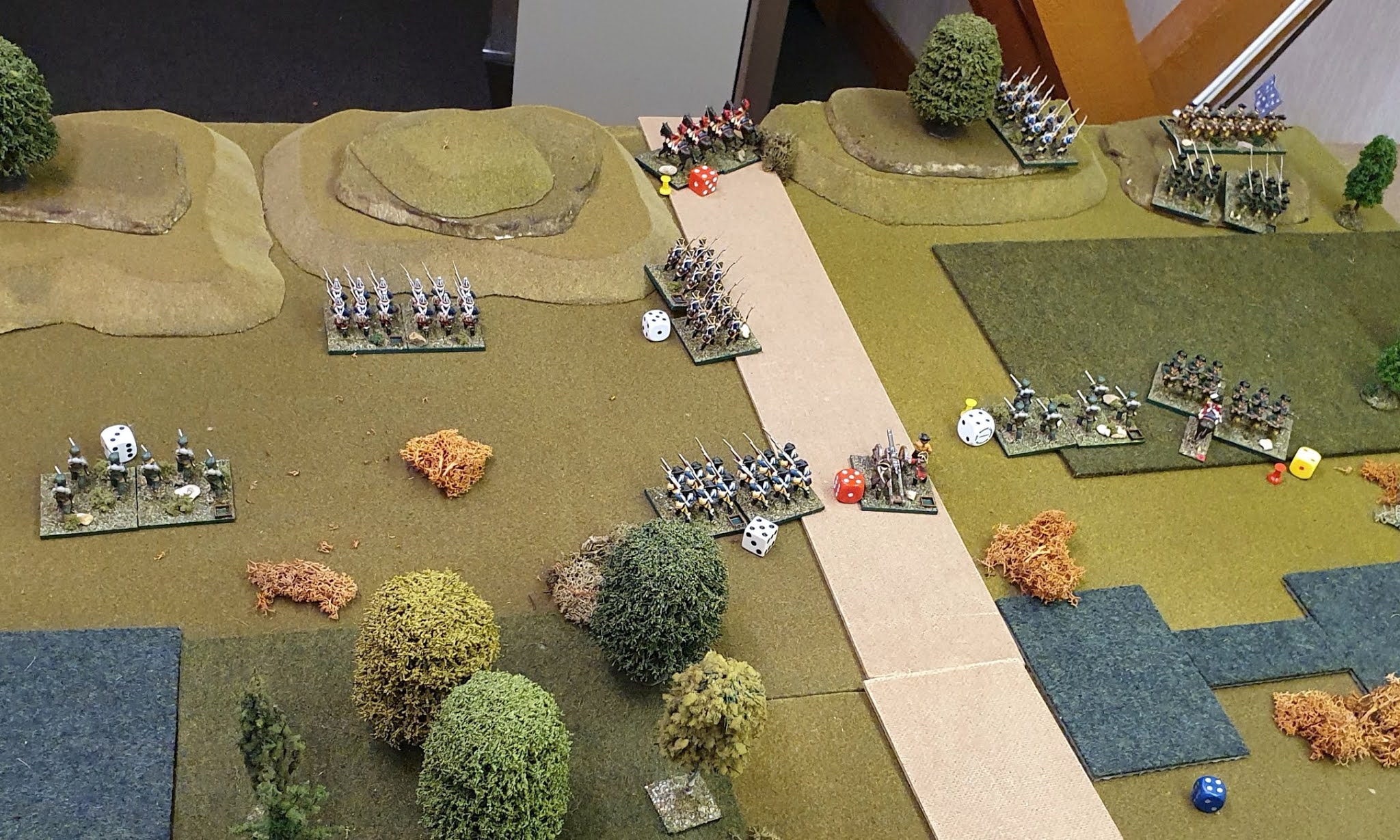
Further reinforcements for the royalist cause, this time in the shape of Colonel Thomas Blagge's Regiment of Foote...

Blagge is yet another of those "unknowns" from the period, who turn out to be larger than life, and extraordinary, when you start to do research on them and the regiment(s) that bear their names..

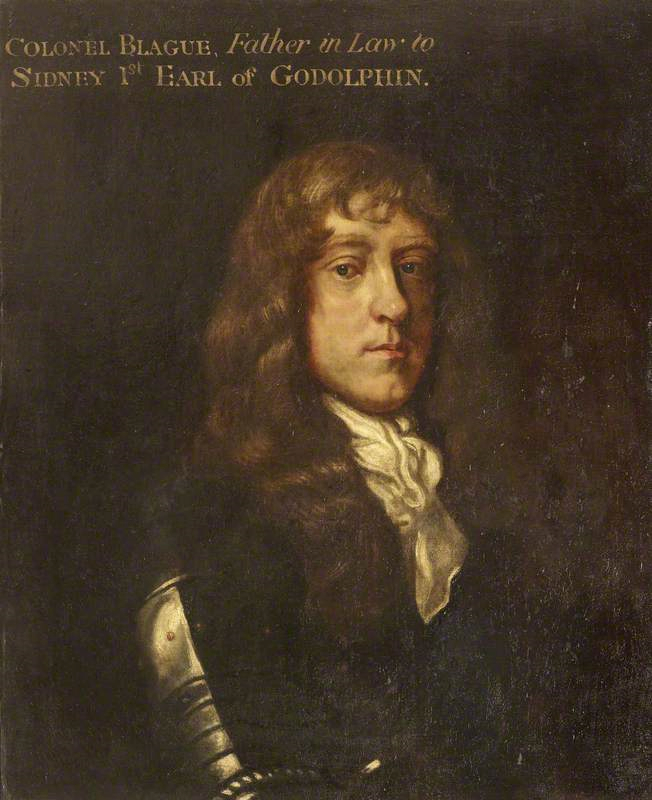
The splendidly named Thomas Blagge (that's him, left) came from Horningsheath in Suffolk, and was about as Royalist as it is humanly possible to be. He was a Groom of the Chamber to Charles I (possibly Groom of the Stool, and that was a role I had not heard of before! ). 

From 1642 he was the Governor of Wallingford Castle (south east of Oxford, about half way between Oxford and Reading as the crow flies), and in 1646 he was the last to surrender a major English stronghold, following a siege of the castle by Sir Thomas Fairfax. Even then he refused to surrender the castle until he had the express permission of Charles I to do so!

He survived the war, and not surprisingly was also a strong supporter of Charles II, he was variously imprisoned (while living in England) and exiled, and he fought at the battle of Worcester in 1651, and upon the Restoration was given a commission of Colonel in the Guards and made Governor of Yarmouth - sadly he died 6 months after Charles II regained the throne..  what a character!


At Edgehill the regiment were part of John Belayses Brigade (along with Belayses own regiment and Pennnyman's) and were in the centre of the second line of Royalist infantry, and according to Young* and Scott/Gruber/von Arni at least were about 700 strong making them the strongest regiment in the brigade. During the battle the brigade and regiment were part of the general Royalist foot advance, and the brigades on the second line came up and filled the gaps between the brigades in the front row. Blagge's therefore ended up towards the right of the line. Like most of the Royalist infantry they aquited themselves well..

As for the regiments appearanced - little is known about either standards or uniform colours, the very excellent BCW site (see further reading list below) indicates that their flag may have been black (though that could just as easily have been the standard of the other regiment they shared garrison duties with at Wallingford) it also indicates that both regiments got an issue of uniforms while they were in garrison, but as that was two or three months after Edgehill it doesn't help us to identify what they wore at the battle..  as is the case with much of this period of the war then I went with the accepted argument that "they probably wore mostly civilian clothes" and I went with the plain cross of St George for an ensign - I liked the look of it, and it gives the impression of a hastily raised regiment..! 

So mostly grey's and shades of brown for the uniforms, apart from the command figure who I have chosen to represent as the regiments Lieutenant Colonel, Sir William Lower [clicky], a noted dramatist, who his own cousin described as "an ill poet, and a worse man." 

In my minds eye at least, he would have favoured the colourful clothing I have attired him in here.. and it gave me a good excuse to trot out the glorious purple again!

 By the end of the first of the three English Civil wars they were very definitely veterans, after Edgehill they fought at Turnham Green/Brentford, both Newbury battles, Cropredy, Lostwithiel, and a detachment were at the relief of the siege of Basing House. 

They were disbanded in 1646.

Figures are 15mm - Peter Pig - painted in December 2020.

* Further reading:

  • http://www.earlrivers.org.uk/regimental-history/wallingford-castle
  • http://wiki.bcw-project.org/royalist/foot-regiments/thomas-blagge
  • https://www.westminster-abbey.org/abbey-commemorations/commemorations/thomas-blagge
  • http://wiki.bcw-project.org/royalist/foot-regiments/thomas-blagge
  • Peter Young - "Edgehill 1642"

Friday, December 11

Lord Wharton’s Regiment of Foot

The man himself at the age of 19..
painted 10 years before Edgehill ...

More reinforcements for Parliament..

Wharton's were another one of the regiments in Charles Essex's Brigade that broke and ran at Edgehill ... 

They were originally raised as one of the regiments destined to be a part of the expedition to Ireland in 1642, and in fact their Colonel, Philip Wharton, 4th Baron Wharton (that's him, left), was to be Colonel General of the entire force. 

At Edgehill then, they were bundled along in rout with most of the rest of the brigade in the aftermath of Rupert's first charge with the Royalist cavalry, but were also, according to most of the sources I have read, roughly handled by returning Royalist cavalry and lost a number of their standards..

Wharton commanded a separate troop of horse at Edgehill and was probably with them rather than his foot regiment when they routed from the field (Young)..

According to Young, like Mandeville's, they were disbanded after Turnham Green possibly as a result of their performance in the battle, but again there were plenty of other regiments in the Parliamentary army that did as badly and weren't disbanded..


Scott, Turton and von Arni speculate that the regiment may have had grey coats, so that's good enough for me in this case, and  they give their numbers as  being 500 at the battle. In Aaron Graham's "The Earl of Essex and Parliament’s Army at the Battle of Edgehill: A Reassessment. War in History" he numbers them as 608 rank and file - I don't doubt the actual number is somewhere between the two.. 😀


I can find no record of any standard for the regiment - perhaps not surprising given their longevity, so have been forced to fall back on my imagination - those top right are the heraldic arms of the 4th Baron ..and I thought that one of the smaller devices - in particular the figure kneeling (and presenting a sword) - on a plain background, would make an ideal Colonels colour, but in the end decided to go with plain green with a little battle damage...  

 
So - 24 figures - a hodge-podge/mix of makes (Peter Pig, Gallia, Minifgs I think) - all 15mm - and all paint butchered in November 2020.

Monday, November 30

More officers... and wet palettes...

Royalist Officer of Horse c 1643
by Chris Collingwood [clicky]
- splendid!
Just to prove it wasn't just a flash in the pan, I can confirm that paint brushes continue to be wielded in earnest in the loft-waffe - this time on some further officer material for the ongoing English Civil War project..

The rules I am using, would have these as brigade and higher command - they can be used to improve morale of units that require it, and if the going gets really dicey you can use them to improve combat throws for units in melee..  the downsides of which one doesn't want to contemplate...

So three figures - undercoated/primed some considerable months ago - and grabbed so as to keep the paint mojo working (it worked by the way - bear with as the next post will show further more considerable fruits of said labour)..

I have also been interested in recent video's and postings about a thing called a "wet palette" and despite having been in the paint butchery game for 45+ years, I have never used one - but I can advise that these were the first figures painted using said wet palette...  and mightily impressed I have been..  

Mine is a home made affair, and constructed using the same method I saw in a video I was watching (this one [clicky]).. One flat/sandwich type, air tight box (in my youth we would have called them Tupperware) - in the bottom put three or four thicknesses of kitchen towel - wet them down so they are wet rather than floating, put a square of baking paper over the top, then use the baking paper as you would a normal palette...  you'll find (hopefully) that the paint stays fluid and workable for longer, I did, and it is brilliant to be able to just go back to a colour you have used 3 or four layers ago and still be able to use it whereas on my old palette (a saucer) it would have dried...   NB. Acrylics only of course

Anyway - here's the first one (following) an officer of the Commonwealth in half cuirass, and wielding what I believe to be a baton..  he's better armed than most so clearly may come from money

Next - my favourite of the three - the sash is close enough to red or orange I can use him for both sides

..note the gold leaf on the saddle cloth to indicate he is gentry.... I have no idea if red/orange feathers were available - but it looks good...!

Finally a Royalist in purple..  I also broke the habit of a lifetime and put some blazes on these horses - I've always liked Lee's (of a Napoleonic Painting Therapy blog) [clicky] horses and he does this quite a lot so I thought I'd have a go...worked well, and enlivened what would have otherwise been a fairly featurless set of bays..

Last of all a group shot..  next time these guys meet it will be across the table..


So, three mounted figures, Peter Pig, 15mm, painted November 2020.

Sunday, November 22

Iron (& cotton & timber) clad reinforcements..

As mentioned in the last post..  reinforcements have arrived to bolster the forces of the US and Confederate navies courtesy the Peter Pig "lockdown/COVID sale" (it's a dark cloud that doesn't have some kind of silver lining, etc etc).....

The fleet in its entirety steaming majestically into the distance.. 
Small gunboat - following - this one represents the USS Fuchsia [clicky] but in my games will swap sides as and when the scenario requires it - the linked article is worth a read as she had a very interesting start in life...  the actual Fuschia was armed with a 30-pounder rifle and a 24-pounder howitzer - small but punchy...  and unlikely to be that heavily armed in Confederate service!
Proof it any were needed that RO-RO ferries are not a new concept..  this is the double ended paddle ferry that represents the Commodore Morris [clicky] though again she will serve both sides as the need arises...  proof if any were needed that both sides would use anything to project their power into the various rivers and tributaries of Virginia and the southern states ...  so an innocuous ferry boat from New York is enrolled in the US navy and given a 100-pounder rifle, a 9 in (230 mm) smoothbore gun, and four 24-pounder howitzers - and that is quite a punch!  Little or no armour though...
Next - following - this ship represents the USS Tyler [clicky] which was a timberclad* warship in the service of the US navy...  armament was a 32-pounder gun, and six 8 inch (200 mm) guns...
*there were not many of these in the war - they were built by the Union as a stop gap to cover their shortage of ironclads, take one basic paddle steamer and cover it in wooden armour..  5 inch thick, and oak planking over the paddle wheels.

...thought this was very good..  clearly washing day... 


Next, and last, the one I like the best - she represents the CSS Governor Moore [clicky] a cottonclad* paddle steamer armed with two 32 pdr rifled cannons..
* lots more here [clicky] but in essence, due to their lack of resources, the Confederate navy would use whatever they had to hand, and being cotton producers they used compressed cotton bales as an "armour". 'Five hundred-pound cotton bales were placed, on their sides, three bales high, with another row of bales lying flat behind the first row; these bales served as platforms for sharpshooters'. 

My reading would indicate that the cottonclads tended to be fitted with rams to make up for the lack of gun armament...  they would also have a large contingent of riflemen/marines to enable boarding..  going to add an interesting feature to games!

Further reading:

Monday, November 16

John Corrigan Memorial game 2020 - "Attack on a Prepared Position" - Game

...and so to the game report which was - as one of the commenters to the last post mentioned - a hard nut to crack indeed for the defender...

I think most people interested in military history would be aware of the maxim that as an attacker you need a least a two to one superiority when attacking a fixed position, but in this case/scenario it's a difficult proposition for the defender due to the amount of ground they have to defend*..

 Scenario specifics:

  • Rules were the Will McNally free one's available here [clicky] but with some amendments as documented on my project page (link over on the side there)
  • Blue (defender - DG) will be the Americans, Red (attacker - me) the British/Hessians
  • Hidden deployment is available to the Blue player if he wishes with a maximum of one unit per wood. We played it that the red player deployed first, then the blue player deploys any units he wants to, but deploys the rest on a map and reveals them as and when he felt that they would be "discovered". For the woods we agreed units could remain hidden until the red player has one of his units in contact (ie, base edge on the wood edge) at which point the wood is considered “scouted” and any hidden units should be deployed.
  • Hills - the lower/single slopes were classed "gentle", the upper/secondary slopes "steep". Woods are classed as “open”.
  • Game length - 12 turns (which is 8 infantry moves in line from one end to the other plus 50% as per the scenario guidance)

So having mentioned forces then, the orbats were as follows:
 
Defenders:

  • 1 Light Infantry unit
  • 3 Line Infantry units
  • 1 Artillery unit (we agreed "Light" for both sides)
Attackers:
 
..this was also my order of march for entering the table, going front to back, from the right to the left..
  • 2 Light Infantry unit
  • 6 Line Infantry units
  • 1 Cavalry unit
  • 1 Artillery unit

The Game:

First contact (following) - about move two I think - my scouting dragoons have uncovered Americans (light infantry) in the woods).. I'm bringing up my lights to support the cavalry. On the other flank I have sent my other unit of lights to scout the other wood...


Couple - maybe three? - moves later (following) and the American lights have retired from the woods so I have pursued with my cavalry with the intention of 'handling them roughly' only to be met by a volley consisting most of bent nails and scrap iron..  first blood to the Americans, and the cavalry retire wounded to the woods... 

The other woods have proved to be clear of enemy, and a general advance is underway - both sides have deployed artillery and are popping away at each other at extreme range; DG has already scored a hit on my artillery (dice and yellow pin to denote "shaken")


Later - I would think 4 or 5 moves - it is beginning to get a bit hairy..  the cavalry recovered and charged again but as you can see were repulsed (shaken but still on 5 so no additional casualties) their place has been taken by the lights who are bravely charging up the hill to get at their American opposite numbers. My regulars are shaking out in to line for the inevitable close assault. On the other flank the lights have hot footed forward with the intention of taking on the American artillery..


Schwerpunkt (following)..  again, a few moves later - going to guess around move 8 or 9..  all American forces are now deployed in plain sight. From the left, my lights have pushed back the American lights who's place has been taken by a battalion of Green Mountain Boys who are already taking a bit of a licking..  at the bottom of the hill the Hessian Erbprinz grenadiers are about to amble up the hill (they're pretty, but as useless as they are magnificent looking! ) The cavalry have regrouped and about to charge the American regulars in the middle (purple dice) who have already seen off those British lights. On the far right, my assault columns are forming..


End game - following - move 11...  on the far right the last remaining American foot battalion has seen off one attack  (the Brunswick regiment moving away with the red pin is routing) but the second regiment following up closely behind see's them defeated and retiring off the table..  a British win, though Pyrrhic to say the least..

Post match analysis:
  • * An extra unit for the defenders would make this a slightly more balanced game I think..  maybe dice for it using a D6 (1,2 Regular Infantry; 3,4 Lights; 5, Cavalry; 6 Artillery)
  • Game  turn length was about right - I only won this on the last, or last but one, move..
  • Zoom was excellent - no glitches at all - once we got the sound and microphones working it was all pretty seamless and I guess we played for two or more hours, with no timeout (which may have been because there were only two of us - Zoom may have a 40 minute limit for multiple participant calls if you are using the free version??) Technically, I had an HD quality camera mounted high over the table (which showed the whole table bar two or three inches on the attackers edge), plus an older non-HD camera on a long lead for any closer shots, pls the camera on the lap top..  for the next game I'll get another HD quality camera for the close ups, as the old one had poor  picture quality. One thing I noticed with Zoom was that the picture quality overall was far better than Skype.
  • I think the best bet for the defender in this scenario, is to deploy forward of the ridge line so that the ridge can be used as a fall-back position.. deploying directly onto the ridge doesn't leave much room for retire/retreat/recovery
  • Battle honours for this game go to the American lights (the heroes of Carnine [clicky]) who performed valiantly!
  • ...and finally.. Cheers, John! 👍
Bear with - next post will be the newly painted American Civil War ships (and DG and I have already committed to a Zoom game featuring them next month - date/time to be advised..