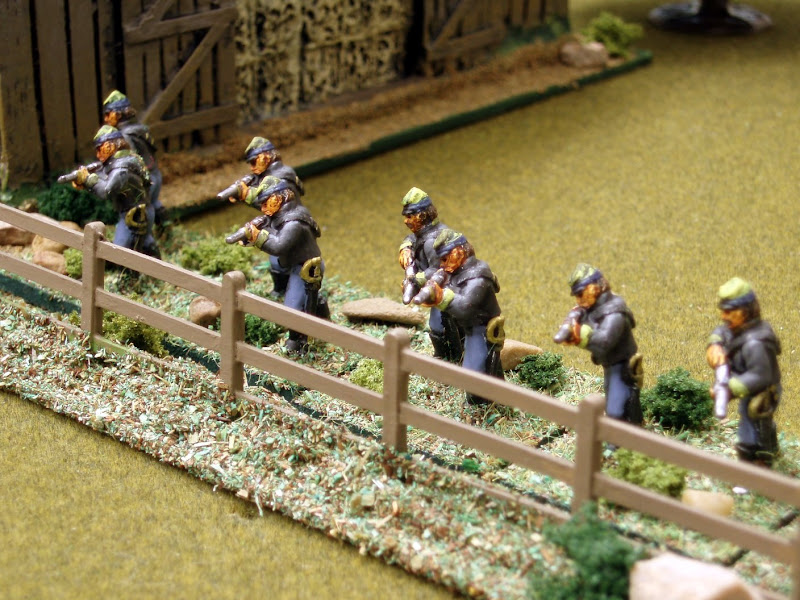
Can't tell you how much I enjoyed putting all the little guys out - and how surprising it is when you do it, just how many you've managed to paint... laid end to end these would reach well beyond 10 feet - even double ranked as they are they extend across six feet..!
So first then, a review of the Allied army (Franco Bavarian army next), who in the little interlude they inhabit have paraded for their general somewhere in Bavaria, sometime in 1704 - let's suggest just after Blenheim...
First then a review of the army as a whole (and please click on any of the following for a pleasingly bigger view):
 ..and then each of the divisions.. right flank:
 ..left flank:
 ..and now the brigades - right flank to left flank.
First the cavalry - this represents Brigadier General Palmes' brigade - from front to back we have Wyndham's, Schomberg's (my favourites! ), Woods, and at the back a Dutch squadron Nassau-Friedland:
 This one represents Brigadier General James Ferguson's brigade - Meredith's (left), 1st Foot Guards (right) and Orkney's in the second line - Ferguson can be seen in the middle with one of Marlborough's runners by his side...
 Next an ad-hoc brigade - in the front rank we have a Dutch regiment - Beinheim (or Bynheim according to your source), in the second rank a composite regiment comprising the grenadiers from four Austrian regiments.
 Next a British brigade - Brigadier General Archibald Rowe's to be precise, comprising in the front row Ingoldsby's (Welch Fusiliers) on the left, and Derring's on the right. The brigadier with runner is in the middle and in the second rank we have Howe's on the left. The regiment on the right is a Dutch regiment, Rechteren's who are part of the next brigade:
 Next up the aforesaid Dutch - Major General the Prince of Holstein-Beck's brigade. In the front rank we have the regiments of Goor on the left (and yes, I spotted that the end file have turned round to have a good look at the second rank!), and Heidebrecht on the right with their regimental gun deployed. In the second rank we have the Swiss regiments of Hirzel (left) and Sturler with the Prince between the two lines.
 Last of all we have the cavalry of the left flank - Major General Cornelius Wood's brigade, with Cadogan's in the front rank, and behind them Lumley's with Wood alongside. I have still yet to paint Wood's own regiment, so for now they are reinforced with the some Austrian cuirassiers of the Alt-Hanover regiment.
 ..and no review is complete without a review of the artillery - safely ensconced in their redoubts in this case:
 ..and just a small part of the commissariat - I'll do a separate post on the transport to do them more justice.
 I think he looks quite pleased...

Last of all - a video...
All of these have been painted since the start of July '06 when the project started, that's thirteen battalions of foot, and seven squadrons of cavalry. Makes are many and varied, but fully documented on my WSS project page (link over there to the left).
Not finished yet - I have some more Black Hat infantry to paint, it's also time for some more cavalry (Woods next!)
Trust you enjoyed - just to let you know that I have turned comment moderation on - too much spam - if it tails off I'll turn it off again, but in the meanwhile apologies for the minor irritation...
So first then, a review of the Allied army (Franco Bavarian army next), who in the little interlude they inhabit have paraded for their general somewhere in Bavaria, sometime in 1704 - let's suggest just after Blenheim...
First then a review of the army as a whole (and please click on any of the following for a pleasingly bigger view):
 ..and then each of the divisions.. right flank:
 ..left flank:
 ..and now the brigades - right flank to left flank.
First the cavalry - this represents Brigadier General Palmes' brigade - from front to back we have Wyndham's, Schomberg's (my favourites!
), Woods, and at the back a Dutch squadron Nassau-Friedland: This one represents Brigadier General James Ferguson's brigade - Meredith's (left), 1st Foot Guards (right) and Orkney's in the second line - Ferguson can be seen in the middle with one of Marlborough's runners by his side...
 Next an ad-hoc brigade - in the front rank we have a Dutch regiment - Beinheim (or Bynheim according to your source), in the second rank a composite regiment comprising the grenadiers from four Austrian regiments.
 Next a British brigade - Brigadier General Archibald Rowe's to be precise, comprising in the front row Ingoldsby's (Welch Fusiliers) on the left, and Derring's on the right. The brigadier with runner is in the middle and in the second rank we have Howe's on the left. The regiment on the right is a Dutch regiment, Rechteren's who are part of the next brigade:
 Next up the aforesaid Dutch - Major General the Prince of Holstein-Beck's brigade. In the front rank we have the regiments of Goor on the left (and yes, I spotted that the end file have turned round to have a good look at the second rank!), and Heidebrecht on the right with their regimental gun deployed. In the second rank we have the Swiss regiments of Hirzel (left) and Sturler with the Prince between the two lines.
 Last of all we have the cavalry of the left flank - Major General Cornelius Wood's brigade, with Cadogan's in the front rank, and behind them Lumley's with Wood alongside. I have still yet to paint Wood's own regiment, so for now they are reinforced with the some Austrian cuirassiers of the Alt-Hanover regiment.
 ..and no review is complete without a review of the artillery - safely ensconced in their redoubts in this case:
 ..and just a small part of the commissariat - I'll do a separate post on the transport to do them more justice.
 I think he looks quite pleased...
Last of all - a video...
All of these have been painted since the start of July '06 when the project started, that's thirteen battalions of foot, and seven squadrons of cavalry. Makes are many and varied, but fully documented on my WSS project page (link over there to the left).
Not finished yet - I have some more Black Hat infantry to paint, it's also time for some more cavalry (Woods next!)
Trust you enjoyed - just to let you know that I have turned comment moderation on - too much spam - if it tails off I'll turn it off again, but in the meanwhile apologies for the minor irritation...