Wednesday, November 4

Now this is handy.. the tutorial...

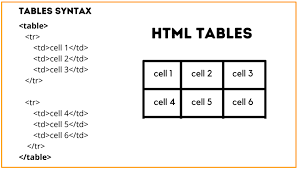
Wondered if it might help if I gave a step by step on how to use that table generator I mentioned [clicky]..  appreciate there'll be those this doesn't apply to, but equally there are those it may help.. so, if generating tables in your blog posts is of no interest, I'll return you to your normal programming..  "next blog, please" ๐Ÿ˜

If you are interested though...

1/. Got to website and select the HTMLTables option


2/. Set the size of your table.. it doesn't matter if you want to add or delete extra rows or columns later.. default seems to be 4 (rows) by 5 (columns) select the 'table' drop down and then 'set size' to open a little box on which you can select with your mouse to set size of table (just move the mouse over the area you want and click).. it tells you the size at the bottom as a check..  (NB. If at a later point you want to add or delete rows or columns select the relevant drop down for column or row)


3/. Not essential but this is a 'tarting up' point - either do it now or after you've entered your content...  this is how you space the lines and columns - narrow or wide..  just slide the bar with your mouse..


4/. Time to put your data/content in - just click on the cell and start typing - you can either do it here, or copy the blank table into the Blogger post and do it there.. this example assumes you're doing it in the web page..


5/. Set the alignment, font, font characters (bold underlined etc)..  for Blogger I wouldn't bother with these, as you can do the latter in Blogger..  but you can do it here if you want..


6/. Click the "Do Not Generate CSS" check box - CSS is an HTML language but the code is more complex, and isn't necessary in Blogger, as Blogger has it's own CSS code running in the background..  then click the "Generate" button


7/. Click the copy to clipboard option


8/. Go to blogger, open a new post, select "HTML" option at top, and paste the code, Click "Compose" and voila, un table - the only change I made was to add "Border=1" to the "Table" command right at the beginning so that I could see the lines between the cells...


Done....

tutorial fgfgf fgfgf
fgffgf
fgffg
fgffg
fgffg
fgfgfg
fffgg
fgfgfg
fgfgffg
fgfffgf
fgffgfgg
fgffg
fgf
fgfg
fgfg
fgfgf

Sunday, November 1

"Marlborough's Other Army" - a review..

Taken me a while but I got there in the end.. 

So first things first, the time it took me to read the book is not indicative of any inherent defect in the book, just that the nature of the book (in my view) is not conducive to a straight reading...  this is first and foremost an entire book of facts and numbers..  it's basically a wargamers/military historian's delight..  it reminded me of the "Boys Book of Knowledge" from when I was a youngster, and similarly it's not a book to just pick up and read, it's a book to refer to when you need a specific fact..

So what do you get??

Well, first off you get a thumbnail history of the war in Spain and Portugal between the years 1702 and 1712 (including Gibraltar and the Balearic islands), the campaigns/strategies of the year and any significant battles that occurred in that year.. one chapter per year...  each chapter gives detail on the numbers involved for each army/protagonist.. if you wanted to fight any aspect of the campaign or battle there's everything you could possibly need..

Second, what you also get is a fairly detailed breakdown of each of the constituent parts of the Allied armies of the time - one chapter for each divided into foot, horse and artillery.. The author examines each of the British, the Dutch, the Portuguese, the Carolean Spanish (basically those Spanish in support of the Allied cause as opposed to the Spanish in support of the Bourbon/French cause), the armies of the Palatine, and lastly the Austrian/Imperial contingent..  in each chapter he gives an overall view of the tactics of each army - how the infantry fought (eg, firing method, platoon or volley etc.) how the cavalry fought (advance at the trot or gallop, fire or not etc.) and types of artillery...  he also gives detail on numbers and organisation of regiment/battalion/squadron where known..  a goldmine, but last of all he gives uniform details for the relevant army.. There's clearly an amount of theorisation, but it's clearly stated where this is the case, and why, and his reasoning..

Last there is a good bibliography/reading list...

Do I recommend it?? Yes, without a doubt..  Is it an easy, pick up and read?? No... this is a reference in the classic sense...  My copy is now full of post it's, and underlines, and written comments/annotations...  I'll not be getting rid of it! 

Steve the Wargamer rates it as a 9 out of 10.. if you have an interest in the Wars of the Spanish Succession it's a must have (in my view)..

Saturday, October 31

Now this is handy..!


If you're a control freak like me you love using tables in blog posts for things like battle reports/casualty tables/orbats and the like..  just found this site, it's the dogs nadgers... ๐Ÿ˜€

http://www.tablesgenerator.com/

Just create your table, push the button to generate the code (I suggest using the "no CSS" option its simpler) and then push the button to copy to clipboard. Go to your new post and copy the contents of the clipboard into the HTML tab of your post and jobs a good 'un..

The interweb is a wonderful thing...!

Thursday, October 29

"Marston Moor" - a review

One of a series of light reads I've enjoyed while reading the War of the Spanish Succession history of the events in Spain and Portugal, but I thought this one deserved a little more than just the usual paragraph or two to the left.. 

The latest in Michael Arnold's fictionalised account of the English Civil War (amazing to think that this is number 6 in the series!) as seen through the eyes and sword arm of his eponymous hero Major Stryker.

This time the year is 1644, their loss at Cheriton a few months before has sent a shock wave through the Royalist cause, but the focus has now shifted to the North where York is held strongly for the King but is threatened by a Parliamentary force now strengthened and reinforced as a result of the signing of the Solemn League and Covenant [clicky] by a strong Scottish force.

The King orders Prince Rupert to relieve the siege and set things to rights in Yorkshire and the north, and Stryker, of course goes with him, this time though as a 'reformado', an officer without command (his force of musketeers was lost/drowned/captured in the previous book) he has only his closest companions, including his sergeant Skellen, to help.

The book opens then with the siege and taking of Bolton - one of the more bloody events of the 1st Civil War. The victorious Royalist forces ran amok as a result of the garrison of the town having hanged a Royalist officer on the battlements following an earlier failed assault... in the chaos that follows the successful attack, Stryker interrupts a band of Royalist mercenaries ( Hungarians) lead by a splendidly over the top character called the "Vulture" (he likes to sharpen his teeth to points with a file in his spare time ), who are about to torture a young girl, the last of her family still alive. It transpires of course that she is the key to the source of a cipher that the Vulture is trying to recover, and the Vultures efforts to kill Stryker, and take back the girl are a background theme for the rest of the book as it seems the Vulture is working for a spy master who is keen too cover his tracks...

Having taken Bolton, Rupert then moves on Liverpool (he needs a port in order to land supplies and reinforcements) and having taken Liverpool relatively easily, he gathers his forces and moves on York, and an appointment with disaster..

The campaign was a disaster for the Royalists (of course) and Arnold is very good on the ambiguous letter from Charles to Rupert which Rupert took to be a command too attack and destroy the Parliamentary army (despite being hideously out numbered), but which other advisers didn't see the same way. Following a couple of lightning marches Rupert managed to out manoeuvre the Parliamentary forces outside York, and having lifted the siege joins his army with the Royalist forces from the city and then moves to force battle - the two sides meet on Marston Moor..

The outcome of the battle is pretty well known to anyone with a passing interest in history, military or otherwise, so it is no spoiler when I say the Royalists not only lost, but lost badly... the battle is very well described in the book and I would say comprises a good quarter/fifth of the entire book (in his notes at the end the author said he was planning to write an entire book featuring just the battle!). Within the confines of what is essentially fiction, the author describes well how each piece unfolded and how the Royalists eventually managed to snatch defeat from the jaws of victory (at one point, all three Parliamentary commanders had left the field convinced they had lost)...

The book ends with Stryker and his friends captured after the final last stand of Newcastle's "Lambs", the famous White Regiment...  stirring stuff indeed.

The publishers (I note) are still including the "Sharpe of the Civil War" sticker on the cover of the books, if I was the author I think I'd be a bit irritated by now given that this is the 6th book, and his hero really is standing on his own feet/merits now, though having said that, and I'll say it again, my favourite character is Lancelot Forrester, a mere captain of foot, but I think far more well rounded as a character - Stryker is a bit too much of a cartoon/exaggeration...

Cracking bit of escapism...   I'll give this one an 8...

Sunday, October 25

Bengal Lancers in the Sudan

..wonders will never cease - he's finally lifted a paint brush on something other than the boat... ๐Ÿ˜

The Minifigs figures I bought have finally seen some paint applied by something other than a spray can (ie. the undercoat)!

This is what I was trying to represent..

Caton-Woodville (of course!) - illustrated London News 1882 - 13th Bengal Lancers in the Sudan showing campaign dress/equipment
This is how they came out..


My research would indicate that three regiments of Bengal Lancer/Cavalry served in the Sudan at various times - there were thirteen or fourteen regiments of them in total but the rest served in either Afghanistan/Peking or locally in India...
  • the 9th [clicky] - in 1885 which was the year they became Lancers - there is an excellent regimental history of their time in the Sudan on this page and I recommend it highly - fascinating reading...  I painted mine to represent this regiment using the excellent Perry Miniatures uniform guide [clicky]..  I'll be honest and say I picked them purely because the turban looked to be the least complex to paint!

  • the 13th ( (Duke of Connaught’s) [clicky] -  in 1882 they served at Tel-el-Kebir where they impressed the aforesaid Duke so much that he asked the his mother (who happened to be Queen Victoria!) for the honour of being their Colonel in Chief.

Given they were my first painted figures in some considerable time (the first three or four units after a hiatus* are always troublesome, and then you kind of get into the swing..  which isn't to say they get any better painted, just a little quicker..! )


So eight figures, Minifgs, 15mm, painted with Vallejo and Games Workshop paints, and Rowney inks (turban, puttees and lance pennant).. 2 pts a figure on the Olley scale, 16 points to add to my pitiful yearly score...  

* from here on defined as any period long enough for your water jar/mug/beaker/receptacle to completely dry out...  clearly this doesn't apply to those still on the Humbrol dark side...